An ECG is one of the most commonly used cardiac tests because it gives doctors a quick view of the heart’s electrical activity. It is simple, non-invasive and usually takes only a few minutes, yet the information it provides can be important when someone has chest discomfort, palpitations, dizziness or other possible heart-related symptoms.
For patients in Kalyan, Maharashtra, understanding why an ECG is advised can make the testing process less confusing and help them know what the result can—and cannot—tell them.
What Does an ECG Measure?
Every heartbeat is triggered by electrical signals moving through the heart. An electrocardiogram records these signals through electrodes placed on the chest and limbs.
The resulting tracing allows a cardiologist to assess features such as:
- Heart rate
- Heart rhythm
- Electrical conduction patterns
- Certain rhythm abnormalities
- Changes that may be associated with heart muscle stress or injury
- Features that may suggest previous cardiac damage
An ECG provides information from the short period during which the recording is taken. This is important because symptoms that occur intermittently may not always appear on a routine ECG.
When May an ECG Be Recommended?
A doctor may consider an ECG when a patient reports symptoms such as chest pain, unusual breathlessness, a racing or irregular heartbeat, unexplained dizziness or fainting.
It may also form part of the assessment of people with known heart disease or cardiovascular risk factors.
In some cases, an ECG is performed before certain procedures or as part of ongoing cardiac monitoring.
What Happens During the Test?
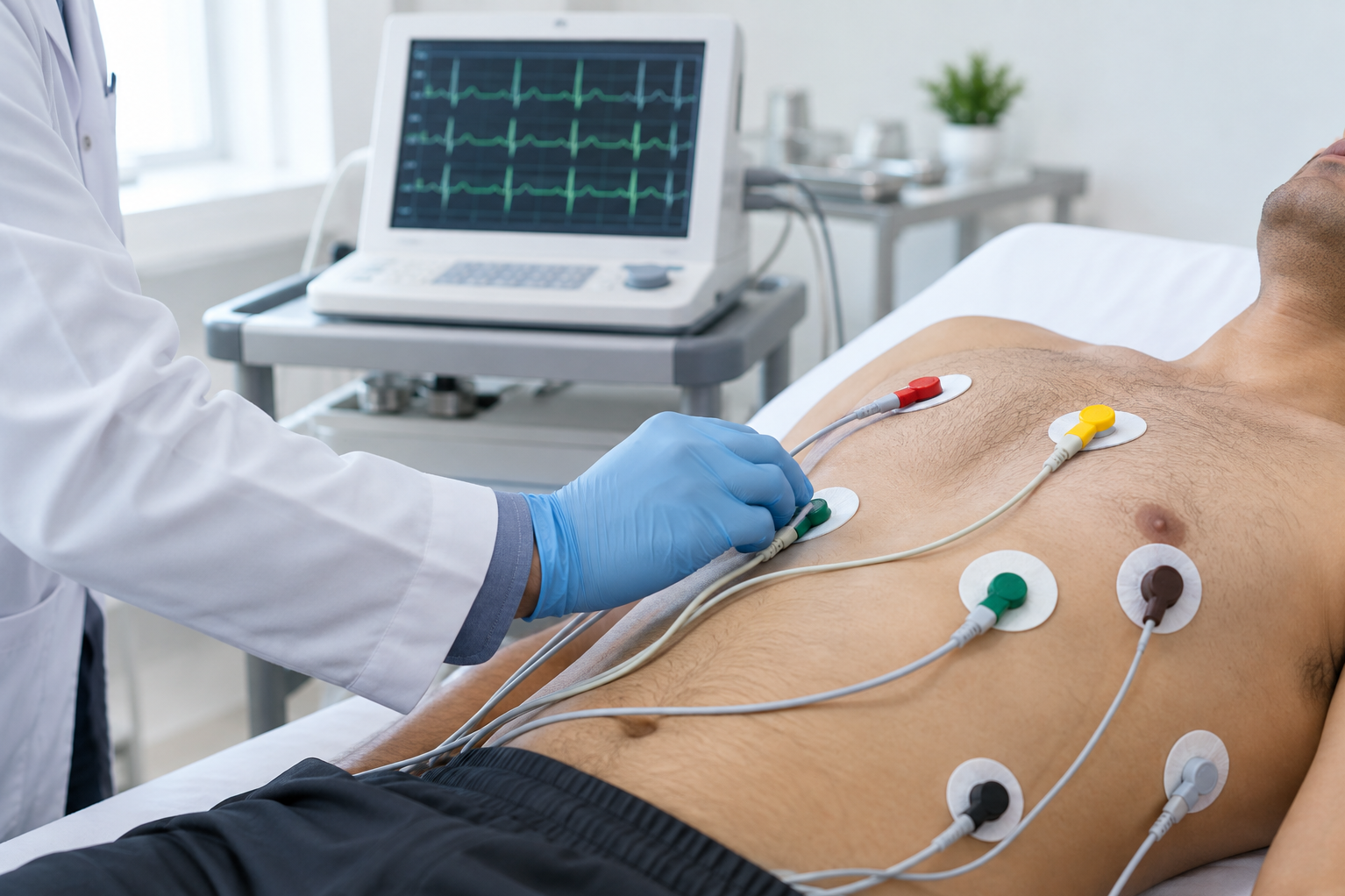
Small adhesive electrodes are placed at specific points on the body and connected to the ECG machine. The patient generally lies still while the electrical signals are recorded.
There are no electrical shocks involved. The machine records the heart’s natural electrical activity rather than sending electricity into the body.
Movement can interfere with the tracing, so remaining relaxed and still helps produce a clearer recording.
Can a Normal ECG Rule Out Every Heart Problem?
No. A normal ECG can be reassuring in the appropriate clinical context, but it does not exclude every cardiovascular condition.
Some abnormalities occur only during physical activity. Others may happen unpredictably during the day. Structural heart conditions may require imaging rather than electrical recording.
Depending on the symptoms, medical history and examination, a cardiologist may recommend additional investigations such as:
- 2D Echo
- Stress Test
- Holter monitoring
- Blood investigations
- Coronary evaluation
The right test depends on the clinical question being investigated.
ECG and Chest Pain
Chest pain is one of the common reasons an ECG may be performed, but chest discomfort has many possible causes. Doctors interpret the tracing together with the nature of the pain, associated symptoms, risk factors and other investigations.
Sudden or severe chest pain, particularly when accompanied by sweating, breathlessness, nausea, fainting or pain spreading to the arm, jaw or back, requires urgent medical assessment rather than waiting for a routine clinic appointment.
Why Interpretation Matters
An ECG tracing should not be viewed as an isolated report. Age, symptoms, medications, previous cardiac history and current clinical condition can all influence its significance.
At Muktai Heart Care Clinic, ECG findings can be considered as part of a broader cardiac assessment for patients in Kalyan when clinically appropriate.
The main value of an ECG is not simply obtaining a printout. It is using the electrical information alongside the patient's symptoms and medical history to decide whether further evaluation, monitoring or treatment is necessary.
Keywords