
A skipped beat after coffee is not the same problem as a sustained fast rhythm, an irregular pulse, or a dangerously slow heartbeat. You will learn which symptoms need emergency care, what to record before an appointment, how intermittent arrhythmias are detected, and when treatment or device discussions become relevant.
Key takeaways
- Call emergency services for fainting, chest pain, severe breathlessness, or sudden weakness.
- Record episode timing, pulse rate, symptoms, triggers, medicines, and smartwatch readings.
- A normal ECG cannot rule out an intermittent arrhythmia; longer monitoring may be needed.
- Treatment discussions can include medicines, catheter ablation, or pacemaker evaluation.
Which rhythm symptoms need routine, same-day, or emergency care?
An occasional skipped or extra beat often reflects a premature atrial or ventricular beat, but a persistently irregular pulse can indicate atrial fibrillation or another arrhythmia. Tachycardia means an abnormally fast rhythm; bradycardia means an abnormally slow rhythm. Heart block is a problem with electrical signals travelling through the heart.
A normal pulse between episodes does not prove the rhythm is normal, and a smartwatch alert is a clue, not a diagnosis.
| Level | What to do | Symptoms or finding |
|---|---|---|
| Routine | Arrange a cardiac consultation for rhythm problems in Kalyan | Recurring palpitations, unexplained pulse irregularity, repeated dizziness, reduced exercise tolerance, or a family history of sudden cardiac death |
| Same day | Seek urgent assessment | A sustained fast or slow pulse, repeated near-fainting, or new symptoms after starting a medicine |
| Emergency | Call emergency services | Palpitations with chest pain, severe breathlessness, fainting, confusion, or a sustained very rapid rate |
Do not drive yourself if you have fainted, feel confused, or have severe breathlessness. Record the pulse and symptom time if this will not delay help.
Arrange routine care even when an episode ends before the appointment. A clinician can confirm the rhythm with an interpretable ECG or monitoring; do not start blood thinners from a wearable alert alone.
What should you record before an irregular heartbeat consultation?
A useful record turns “my heart felt odd” into information a clinician can match with an ECG or monitor. Start it before your irregular heartbeat consultation and write each episode while details remain clear.
1. Record the exact start time, end time, duration, pulse rate, and whether the rhythm felt regular, irregular, fast, or slow.
2. Note what you were doing, your posture, caffeine or alcohol intake, sleep the previous night, fever, dehydration, and stress.
3. List every medicine, supplement, decongestant, and inhaler used that day. Record dizziness, breathlessness, chest discomfort, weakness, near-fainting, or fainting alongside the episode.
4. Bring previous ECGs, discharge papers, current medicine and supplement lists, implanted-device records, home pulse readings, and wearable ECG strips. Add a family history of sudden cardiac death, including who was affected and their age if known.
During a heart rhythm consultation in Kalyan, the clinician will review this history, check your pulse and blood pressure, and perform a 12-lead ECG. The discussion will include medicines, stimulants, alcohol, sleep-apnoea symptoms, and possible reversible causes such as thyroid or electrolyte problems.
The clinician will then decide whether you need blood tests, an echocardiogram, or rhythm monitoring. A smartwatch alert helps provide evidence, but it does not confirm a diagnosis on its own.
Why can a normal ECG miss an intermittent rhythm problem?
A 12-lead ECG records your heart rhythm for only a few seconds. If the episode is absent during the appointment, a normal tracing does not rule out paroxysmal atrial fibrillation, supraventricular tachycardia, or intermittent heart block.
Match the monitor to how often symptoms occur:
- Use a 24- to 48-hour Holter monitor when palpitations, dizziness, or pulse changes happen daily.
- Ask about an event recorder or longer patch-based ambulatory ECG when episodes occur weekly, monthly, or without a predictable pattern.
- Match your diary to the recording by noting the exact symptom time, activity, medicine use, and any wearable heart-rate or ECG reading.
An irregular heartbeat consultation also looks for triggers and underlying disease. Blood tests can check thyroid excess, anaemia, dehydration, and sodium or potassium abnormalities. Tell the clinician about alcohol, anxiety, sleep-apnoea symptoms, coronary disease, decongestants, inhalers, and other medicines; these can provoke palpitations, but should not be used to dismiss them as harmless.
An echocardiogram is useful when the ECG, examination, symptoms, or medical history suggests structural heart disease. A normal pulse or examination between episodes proves only that the problem was not present at that moment.
When do rhythm findings lead to medicines, ablation, or a device discussion?
A documented rhythm, not the sensation alone, determines whether treatment means medicine, catheter ablation, pacing, or observation. For atrial fibrillation, anticoagulation depends on estimated stroke risk: prior stroke, heart failure, hypertension, diabetes, vascular disease, age, and sex all matter, even when symptoms are mild. Aspirin is not an equivalent substitute when anticoagulation is indicated.
| Option | What it means | When it applies |
|---|---|---|
| Medicines | Control rate, rhythm, or clot risk | Atrial fibrillation or other documented arrhythmias after reviewing benefits and bleeding or side effects |
| Catheter ablation | Targets the electrical circuit causing the rhythm | Recurrent supraventricular tachycardia, sometimes as an early definitive option after discussing medication, procedural risks, and preference |
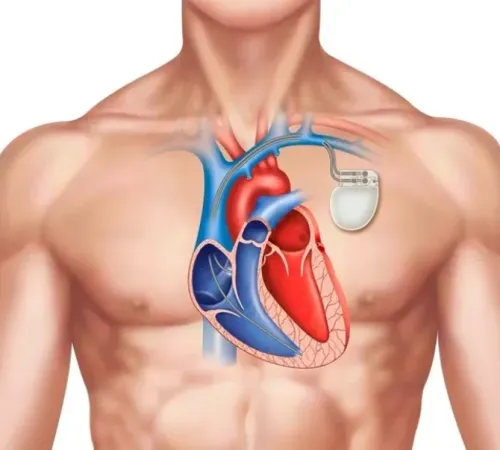
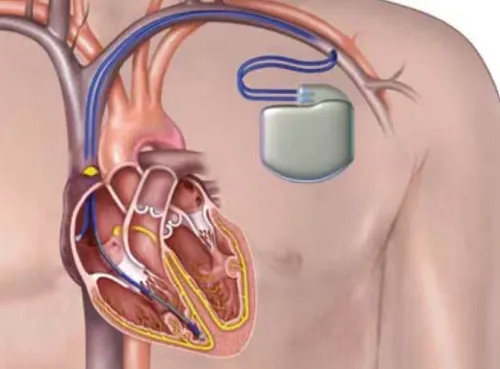
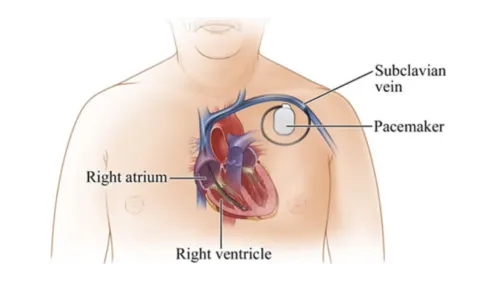
| Pacemaker | Prevents excessively slow rates | Symptomatic sinus-node dysfunction or important conduction disease |
| ICD | Detects and treats dangerous ventricular rhythms with pacing or shocks | Life-threatening ventricular tachycardia or ventricular fibrillation |
A pacemaker consultation in kalyan is relevant when fatigue, dizziness, exercise intolerance, or syncope matches a slow rhythm. Exclude reversible causes first; acquired Mobitz II, high-grade, or third-degree atrioventricular block can warrant permanent pacing even without symptoms. A pacemaker does not generally cure atrial fibrillation or ordinary premature beats.
- Discuss atrial fibrillation treatment according to stroke risk and symptom burden.
- Consider ablation for recurrent supraventricular tachycardia rather than treating it automatically as a last resort.
- Ask what rhythm was recorded, what caused it, and how the proposed treatment changes that risk.
How should you compare rhythm-care options in Kalyan?
Choose a cardiologist for rhythm problems in Kalyan by comparing the follow-up pathway, not the clinic’s distance or equipment list. A normal 12-lead ECG does not exclude an intermittent arrhythmia if symptoms were absent during recording.
| What to compare | Question to ask | Why it matters |
|---|---|---|
| ECG assessment | Can you perform and interpret a 12-lead ECG? | Confirms the rhythm captured during the visit |
| Monitoring | Can you arrange a 24- to 48-hour Holter or a longer patch or event recorder? | Matches monitoring to daily, weekly, monthly, or unpredictable episodes |
| Evidence review | Will you review wearable ECG strips and recorded pulse readings? | A smartwatch alert is a clue, not a diagnosis or a basis for blood thinners |
| Additional testing | Can you order targeted blood tests and echocardiography? | Checks thyroid, anaemia, electrolytes, and structural heart disease |
Also ask:
- How will you explain the results in plain language and set the next review date?
- Who handles device follow-up and pacemaker programming?
- What happens if testing suggests Mobitz II, high-grade, or third-degree heart block?
- How are anticoagulation decisions made for atrial fibrillation?
- Where will you be sent for emergency care if palpitations come with chest pain, severe breathlessness, fainting, confusion, or a sustained very rapid rate?
Muktai Heart Care Clinic - 08048034249 can be considered for a local cardiac consultation for rhythm problems in Kalyan if you ask these questions and confirm its referral pathway. Bring your symptom diary, prior records, medicine list, and pulse or ECG evidence.
Related services
Cardiac Consultation Cardiac Consultation is a comprehensive evaluation of a patient’s heart health to diagnose, prevent, and manage cardiovascular diseases. Dr. View service → |
Cardiac Resynchronization Therapy Defibrillator (CRT-D) Cardiac Resynchronization Therapy Defibrillator (CRT-D) Cardiac Resynchronization Therapy Defibrillator (CRT-D) is an advanced device-based treatment used in patients with severe heart failure and abnormal... View service → |
Frequently asked questions
Which rhythm symptoms need routine, same-day, or emergency care?
Arrange routine care for recurring palpitations without warning symptoms. Seek same-day assessment for a new persistent irregular pulse, sustained rapid heartbeat, or dizziness. Call emergency services for fainting, chest pain, severe breathlessness, confusion, or sudden one-sided weakness.
What should I record before an irregular heartbeat consultation?
Record when each episode started and ended, your pulse rate, rhythm regularity, symptoms, activity, caffeine or alcohol intake, medicines, and any smartwatch or blood-pressure monitor readings.
Why can a normal ECG miss an intermittent rhythm problem?
A standard ECG captures only a short period. If the abnormal rhythm stops before testing, the tracing can appear normal. A Holter monitor, event recorder, or longer ambulatory monitor can capture episodes that occur less often.
When do rhythm findings lead to medicines, ablation, or a device discussion?
Treatment depends on the rhythm, symptoms, recurrence, stroke risk, heart structure, and response to initial care. A cardiologist may discuss rate-control or rhythm medicines, catheter ablation, or pacemaker assessment for selected conduction or slow-rhythm problems.
How should I compare rhythm-care options in Kalyan?
Ask whether the service provides ECG and ambulatory monitoring, reviews previous reports, explains medicine risks, offers ablation or pacemaker referral pathways, and gives clear emergency instructions. Choose care that matches your rhythm finding and follow-up needs.
Related service
Permanent Pacemaker A Permanent Pacemaker is a small, life-saving medical device used to regulate abnormal heart rhythms, especially in patients with slow heart rate... View service → |
Keywords