A bruise at the wrist or groin after an angiogram is often part of normal healing, but a rapidly growing lump, persistent bleeding, cold limb, or worsening pain needs prompt attention. You will learn how to judge the bruise, protect the access site, respond to bleeding, and recognise symptoms that require emergency care rather than routine follow-up.
Key takeaways
- Keep the access site clean, dry and protected from pressure.
- Use a cold pack for short periods during the first 24 hours.
- Seek urgent assessment for expanding swelling, severe pain or active bleeding.
- Call emergency services first for chest pain, breathlessness or weakness on one side.
What a Normal Angiogram Bruise Looks Like
A normal bruise after coronary angiography is usually a flat or slightly tender patch around the wrist or groin puncture site. It may start red or purple, then turn green, yellow and brown as blood beneath the skin breaks down. Small bruises often fade within 1–2 weeks; larger ones can take longer.
| Stable bruise | Concerning change |
|---|---|
| Flat or mildly tender discoloration | Firm, tense or expanding lump |
| Size stays the same or slowly decreases | Bruise keeps enlarging |
| Pain gradually settles | Pain becomes stronger |
| No new blood on the dressing | Dressing repeatedly becomes bloodstained |
| No pulsing sensation | Lump pulses or feels like a heartbeat |
Bruising alone does not usually mean the coronary arteries were damaged or that the angiogram failed. It most often reflects a small amount of bleeding from the entry-point artery into nearby tissue. Do not massage a lump or wrap it with a tight improvised bandage.
Photograph the area once or twice daily in similar lighting and compare its size. Contact the procedure team promptly if it enlarges, becomes more painful, develops pulsation, or repeatedly stains the dressing. A painful pulsating groin lump is not ordinary coronary angiography bruising and needs clinical assessment.
Take your procedure and discharge reports, access route, bleeding start time and photographs to follow-up.
Why the Bruise Forms and When It May Be a Haematoma
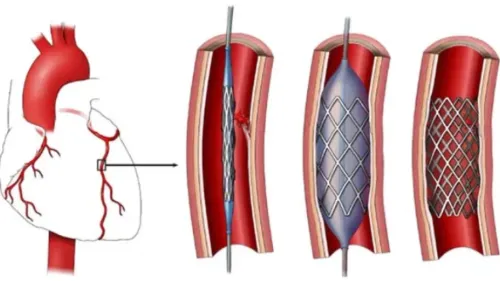
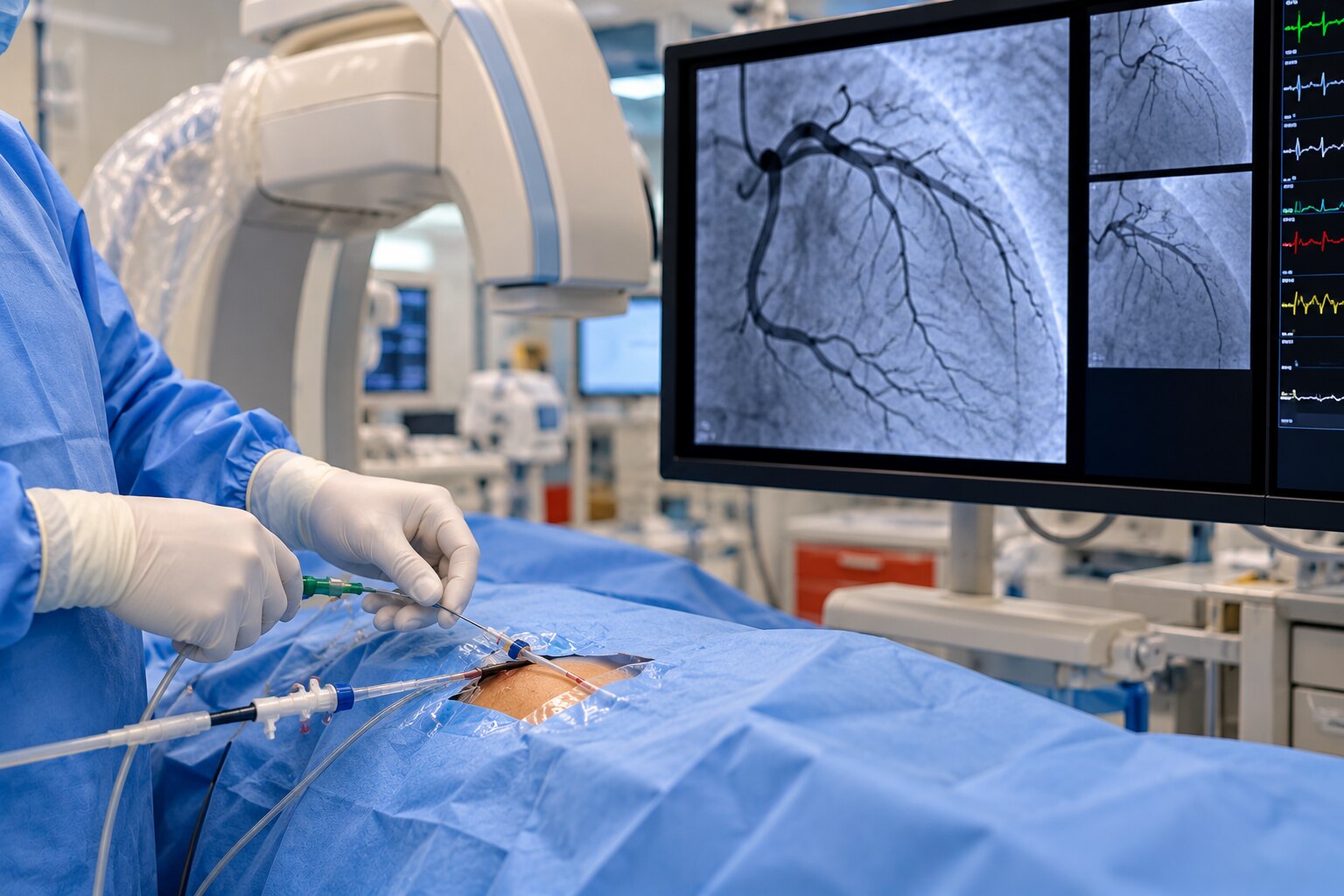
The catheter enters a small artery at your wrist or groin through a needle puncture. A little blood can leak from that opening and collect beneath the skin, causing coronary angiography bruising as the blood spreads and breaks down.
| Feature | Ordinary bruise | Possible haematoma |
|---|---|---|
| Appearance | Flat red, purple, green or yellow discolouration | Firm, raised or tense lump |
| Feeling | Mild tenderness that gradually settles | Increasing tightness or marked pain |
| Change | Colour may spread while the area remains stable | Lump enlarges, or bleeding continues through the dressing |
A haematoma is one of the angiogram access site problems that needs clinical advice, particularly if you take medicine that slows clotting. Aspirin, clopidogrel, warfarin, apixaban and rivaroxaban can make bruising larger or slower to settle. Do not stop an antiplatelet or anticoagulant yourself, especially after a stent; it may be preventing a dangerous clot.
Give the clinician your complete medication list and doses.
A painful, pulsating groin lump or a whooshing sensation can indicate a femoral pseudoaneurysm, which needs urgent assessment rather than home monitoring. Groin swelling with back, flank or abdominal pain can signal deeper bleeding. Seek urgent help immediately if this occurs with dizziness, faintness, sweating, unusual weakness, a rapid heartbeat or collapse.
What to Do at Home for Wrist or Groin Access
A small, stable bruise needs protection, not treatment. Rest the limb, follow the dressing instructions, do not massage the area, and do not wrap it with a tight improvised bandage that could restrict arterial circulation. The discharge sheet takes priority, especially when an arterial closure device was used.
| Access route | What to do at home | Why it matters |
|---|---|---|
| Radial wrist | Keep the arm relatively quiet, keep the dressing clean and dry, and avoid heavy lifting with that arm for the period written on the discharge sheet. | Movement and lifting can restart bleeding at the wrist puncture. |
| Femoral groin | Lie flat for the prescribed period, then avoid strenuous activity and heavy lifting for the recovery period stated in your instructions. | Early bending, exertion or lifting can reopen the puncture and cause renewed bleeding. |
If bleeding starts, lie down and apply firm, continuous, direct pressure over the puncture site. Keep pressing without repeatedly checking; persistent or heavy bleeding requires emergency help, and you should not drive yourself. Ask someone else to call emergency services or arrange transport.
Bruising after coronary angiography in Kalyan should be considered separately from chest-pain recovery. New chest pain, severe breathlessness, collapse, facial drooping, arm weakness or speech difficulty requires emergency services immediately, even if the access-site bruise looks minor.
Contact the procedure team promptly if the bruise keeps enlarging, pain worsens, the lump becomes pulsatile, or the dressing repeatedly becomes bloodstained.
Access-Site Warning Signs That Need Urgent Assessment
A bruise needs urgent assessment when it is rapidly enlarging, tense, severely painful, or paired with bleeding that will not stop. Dizziness, faintness, sweating, unusual weakness, or a growing groin swelling with back, flank, abdominal or pelvic pain can indicate significant bleeding.
Seek emergency help immediately for these angiogram access site problems:
- A hand or foot becomes cold, pale or blue.
- You develop numbness, pins and needles, weakness, loss of movement or a missing pulse after wrist or groin access.
- Bleeding continues despite firm, continuous pressure.
- You feel faint, sweaty, unusually weak, or develop a rapid heartbeat.
| Finding | What it may signal | What to do |
|---|---|---|
| Stable, clean, dry bruise | Routine healing is more likely | Monitor it and seek review if uncertain |
| Increasing redness, warmth, swelling, pus or other drainage, fever, or worsening pain | Infection | Arrange prompt clinical assessment |
| Rapidly enlarging or tight swelling with severe pain | Large haematoma or active bleeding | Seek urgent assessment |
| Groin swelling with back, flank, abdominal or pelvic pain | Deeper internal bleeding | Go to an emergency department immediately |
Infection usually worsens instead of gradually improving. A stable bruise without heat, spreading redness or drainage is less typical of infection, but uncertainty still warrants clinical review.
Do not wait for a routine appointment when emergency symptoms appear. Take the procedure and discharge reports, access route, time bleeding began, changing photographs, and your complete antiplatelet or anticoagulant list to the clinical team.
When Chest, Breathing or Neurological Symptoms Come First
A minor wrist or groin bruise does not explain new or recurrent chest pain, severe breathlessness, collapse or fainting. Call emergency services and go to the nearest emergency department; do not wait for a local appointment or drive yourself.
Treat these symptoms as a possible stroke and seek immediate emergency care:
- Facial drooping, new weakness or numbness on one side of the face, arm or leg.
- Trouble speaking, understanding speech or staying alert.
- Sudden confusion, loss of balance or difficulty walking.
Do not dismiss these signs as a reaction to the bruise. Emergency assessment matters even when the access site looks clean and small.
For coronary angiography follow up in Kalyan, prepare the information a cardiology team needs:
- Bring the procedure report and discharge report.
- State whether the catheter entered through the wrist or groin.
- Record the procedure date and the time bleeding or swelling began.
- Show photographs taken over time so the team can judge whether the bruise is expanding.
- Bring every antiplatelet and anticoagulant dose, including aspirin, clopidogrel, warfarin, apixaban or rivaroxaban.
Muktai Heart Care Clinic - 08048034249 can assess a stable access-site concern during cardiac follow-up, but chest, breathing, collapse or neurological symptoms belong in the nearest emergency department.
Related service
Coronary Angiography Coronary Angiography is a diagnostic procedure used to evaluate the blood vessels that supply the heart and detect blockages or narrowing in the... View service → |
Frequently asked questions
What does a normal bruise after coronary angiography look like?
It is usually a flat or slightly tender red, purple, green, yellow or brown patch around the wrist or groin puncture site. Small bruises often fade within 1–2 weeks.
When is bruising after coronary angiography a haematoma?
A firm or raised lump, increasing swelling, significant tenderness or bruising that rapidly spreads can indicate a haematoma and needs medical assessment.
What should you do at home for a wrist or groin access site?
Keep the area clean and dry, avoid pressure and strenuous activity, and use a cold pack wrapped in cloth for short periods during the first 24 hours. Follow your discharge instructions.
Which access-site warning signs need urgent assessment?
Seek urgent help for bleeding that does not stop with firm pressure, rapidly expanding swelling, severe pain, numbness, a cold or pale hand or leg, fever, pus or worsening redness.
When should chest, breathing or neurological symptoms come first?
Treat chest pain, severe breathlessness, fainting, sudden confusion, trouble speaking or weakness on one side as an emergency. Call emergency services rather than focusing on the bruise.
Keywords