A peripheral angiography visit involves more than contrast images: the team first confirms the vascular question, checks kidney function and medicines, then plans access, imaging coverage and recovery. By the end, you will know what to ask during a peripheral angiography consultation, how to prepare, what the procedure feels like, and how to compare an itemised estimate in Kalyan.
Key takeaways
- Ask why catheter imaging is needed and which artery requires treatment.
- Carry your medication list, allergy history and kidney-related test results.
- Confirm the access site, arteries imaged, monitoring time and discharge instructions.
- Request an itemised estimate covering the procedure, facility, medicines and follow-up.
What happens before the angiogram is scheduled?
A peripheral angiography consultation should establish why catheter imaging is needed before leg artery angiography is booked. The clinician reviews exertional calf or thigh pain, pain at rest, a non-healing foot wound, gangrene, coldness, colour change and reduced walking distance. These details distinguish stable circulation problems from possible limb-threatening ischaemia.
1. The examination documents femoral, popliteal, dorsalis pedis and posterior tibial pulses, along with skin changes, wounds and limb temperature. The clinician may compare blood pressure between both arms and both legs.
2. An ankle-brachial index is commonly used first. An ABI of 0.90 or less is generally abnormal; a value above 1.40 can indicate non-compressible arteries and lead to toe-brachial index testing or another physiologic assessment.
3. The clinician decides whether peripheral artery imaging should begin with duplex ultrasound, CT angiography or MR angiography. These non-invasive options are often more appropriate when symptoms are unclear or revascularisation is not being considered.
4. The consultation defines the target: aorto-iliac, femoropopliteal, below-knee, upper-limb or renal arteries. “Peripheral” does not mean a coronary angiogram; it refers to arteries outside the heart and brain.
Before booking, confirm whether the study is diagnostic only or whether angioplasty or stenting could follow in the same session. That decision changes the consent discussion, equipment, procedural risk and cost.
Which checks and instructions are included in preparation?
Before arriving, disclose your recent creatinine and eGFR results, diabetes, dehydration, acute illness, allergies, pregnancy possibility, previous reactions to iodinated contrast, and whether you can lie flat. A peripheral angiography consultation should also review warfarin or apixaban, antiplatelet medicines and every non-prescription drug.
Advanced chronic kidney disease and diabetes increase concern about contrast-associated acute kidney injury. Ask whether you need a repeat kidney-function test, a hydration plan or alternative imaging before the appointment.
| Preparation issue | What the clinic decides | What you should do |
|---|---|---|
| Kidney risk | Repeat test, hydration or another scan | Bring the latest report and ask what applies |
| Regular medicines | Continue, adjust or pause a medicine | Follow written instructions; do not stop metformin, insulin, anticoagulants or antiplatelets yourself |
| Previous contrast reaction | Premedication, different contrast or another test | Tell staff before the appointment |
Follow the specified fasting or restricted-intake period, and ask exactly when each medicine should be taken. Confirm whether sedation is planned; if it is, arrange an adult escort and do not drive afterward.
Bring your medicine list, allergy history, kidney-test report, referral and previous imaging. Ask whether the peripheral angiography cost and procedure in Kalyan estimate includes blood tests, contrast, access-site supplies, sedation and observation, rather than assuming those items are included.
How is peripheral artery imaging performed, and which arteries are covered?
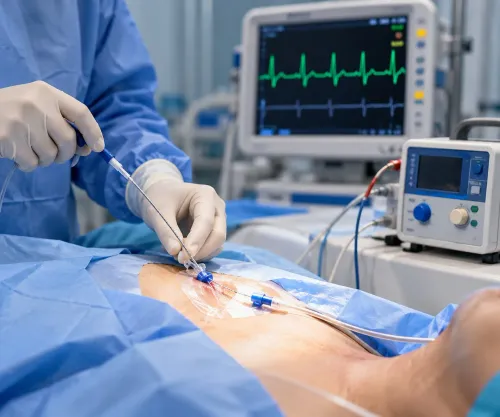
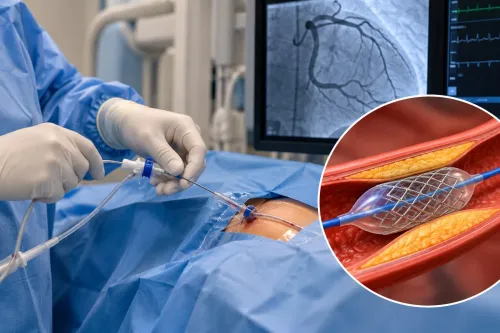
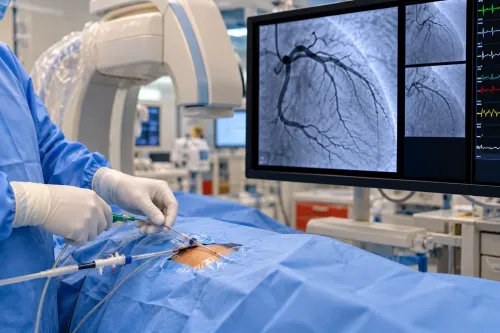
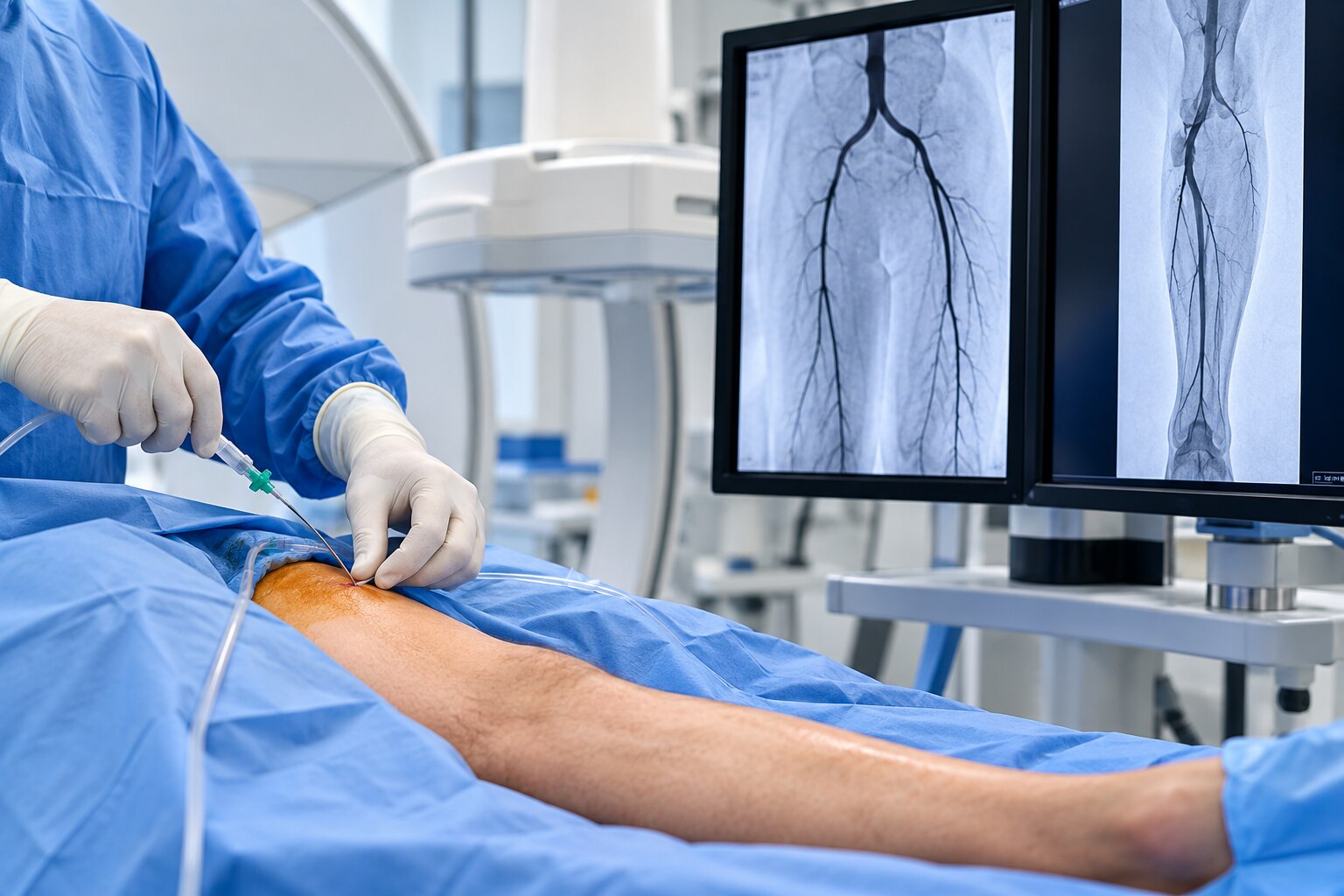
Peripheral artery imaging starts with vital-sign checks, sterile preparation and local anaesthetic at the arterial access site. For leg artery angiography, the catheter usually enters through the common femoral artery in the groin; a radial or another suitable artery can be used when appropriate.
Under X-ray fluoroscopy, the operator guides it to the selected territory and injects iodinated contrast as images record blood flow.
- You may feel brief warmth, flushing or a metallic taste during injection. Report breathing difficulty, throat tightness, rash, chest discomfort, severe pain or sudden weakness immediately.
- The suspected level, symptoms, pulse findings and earlier scans determine whether imaging covers one region or a longer run-off study.
- Images can show stenosis, occlusion, aneurysm, dissection, collateral vessels and distal runoff. Severe calcification, poor flow and movement can reduce below-knee image quality.
| Region | Arteries commonly examined | What determines coverage |
|---|---|---|
| Pelvis | Aorta and aorto-iliac arteries | Groin, buttock or thigh symptoms and reduced femoral pulses |
| Thigh and knee | Femoral and popliteal arteries | Exertional calf pain, thigh symptoms or abnormal pulse findings |
| Calf and foot | Tibial, peroneal and pedal vessels | Rest pain, a non-healing wound, gangrene or suspected distal disease |
| Upper limb | Subclavian, axillary, brachial, radial and ulnar arteries | Arm symptoms, unequal pulses or abnormal blood-pressure findings |
Upper-limb angiography uses a different target plan. For peripheral angiography details in Kalyan, confirm which vessels will be examined and whether the study is diagnostic only or could proceed to angioplasty or stenting, because treatment changes consent, equipment and cost.
How long do recovery and monitoring take, and which risks matter?
After image capture, the catheter is removed, bleeding is controlled, and staff monitor the access site for persistent bleeding or a growing haematoma. They recheck distal pulses, limb colour, temperature, perfusion and vital signs, then give hydration and activity instructions.
A straightforward diagnostic study often includes preparation, angiography, haemostasis and observation on the same day. The duration depends on the closure method, sedation, extra imaging and your health. Ask when you may walk, climb stairs, lift, shower and return to work; keep the area clean and avoid strenuous activity for the specified period.
Arrange transport if sedation was used.
| Procedure | Main risk profile | What changes the risk |
|---|---|---|
| Diagnostic angiography | Bruising, bleeding, infection, arterial damage or blockage, contrast reaction and kidney injury | Kidney function, anatomy, access site and number of vessels examined |
| Angioplasty or stenting | The diagnostic risks plus higher risk of embolus, acute limb ischaemia, emergency treatment and admission | Treatment adds wires, balloons or stents and extends the procedure |
| Either procedure | Rare heart attack, stroke or death | Risk rises with complex disease and serious existing illness |
Seek urgent help for uncontrolled bleeding, an enlarging painful swelling, a cold or discoloured limb, severe new pain, fever, chest symptoms, breathlessness or reduced urine output. For peripheral angiography details in Kalyan, ask the clinic to explain these warning signs and your individual recovery plan before discharge.
What should the report, facility and cost estimate include?
A safe booking gives you two usable documents: a complete angiography report and an itemised estimate. The report should identify every vessel examined, the location and length or severity of each stenosis or occlusion, aneurysm or dissection, collateral flow, distal runoff, and any angioplasty, stenting or other intervention performed.
1. Read the conclusion for a treatment direction: medical treatment with supervised exercise, endovascular treatment, surgical referral or further imaging. A list of images without this clinical interpretation is incomplete.
2. Request peripheral angiography cost and procedure in Kalyan as a written estimate, not one headline figure. Check for consultation, ABI or other tests, blood tests, catheter-laboratory charges, contrast, sterile consumables, sedation, observation, admission, balloon or stent, follow-up and complication treatment.
3. Confirm whether diagnostic angiography and possible same-session angioplasty or stenting require separate consent and separate pricing. A treatment added during the same visit changes equipment, risk and the final bill.
4. Verify where each part occurs: consultation, non-invasive testing, catheter angiography, emergency support, vascular-surgery backup, contrast-reaction management and post-procedure observation. Peripheral angiography details in Kalyan are not comparable if one clinic performs the study onsite while another refers you to a hospital.
Muktai Heart Care Clinic - 08048034249 can clarify which services are onsite, which require referral, and what the written estimate includes. Ask whether a stent, overnight stay or follow-up remains excluded.
Related service
Peripheral Angiography Peripheral Angiography is a diagnostic imaging procedure used to evaluate the blood vessels of the limbs and detect blockages or narrowing caused by... View service → |
Frequently asked questions
What happens before peripheral angiography is scheduled?
The clinician reviews symptoms such as exertional calf pain, rest pain, non-healing wounds, gangrene, coldness, colour change and reduced walking distance. They then decide whether catheter imaging is appropriate and which circulation problem needs investigation.
Which checks and instructions are included before peripheral angiography?
Preparation should cover your medicines, allergies, kidney function, bleeding history and other health conditions. Ask when to stop eating and drinking, whether any medicine requires adjustment, and which test reports or prescriptions to bring.
How is peripheral artery imaging performed, and which arteries are covered?
A catheter is guided through an access artery while contrast is injected and X-ray images are taken. Ask whether the study covers the aorta, iliac, femoral, popliteal or below-knee arteries, based on your symptoms and examination.
How long do recovery and monitoring take after leg artery angiography?
Recovery depends on the access site, contrast use and whether treatment is performed during the same session. Confirm how long you will be monitored, when you can walk, who can take you home and which symptoms require urgent attention.
What should the peripheral angiography report, facility and cost estimate include?
The report should identify the arteries examined, narrowing or blockage, blood flow beyond the lesion and any procedure performed. Request the facility name, specialist details, itemised charges for imaging, catheter equipment, contrast, medicines, monitoring and follow-up.
Keywords