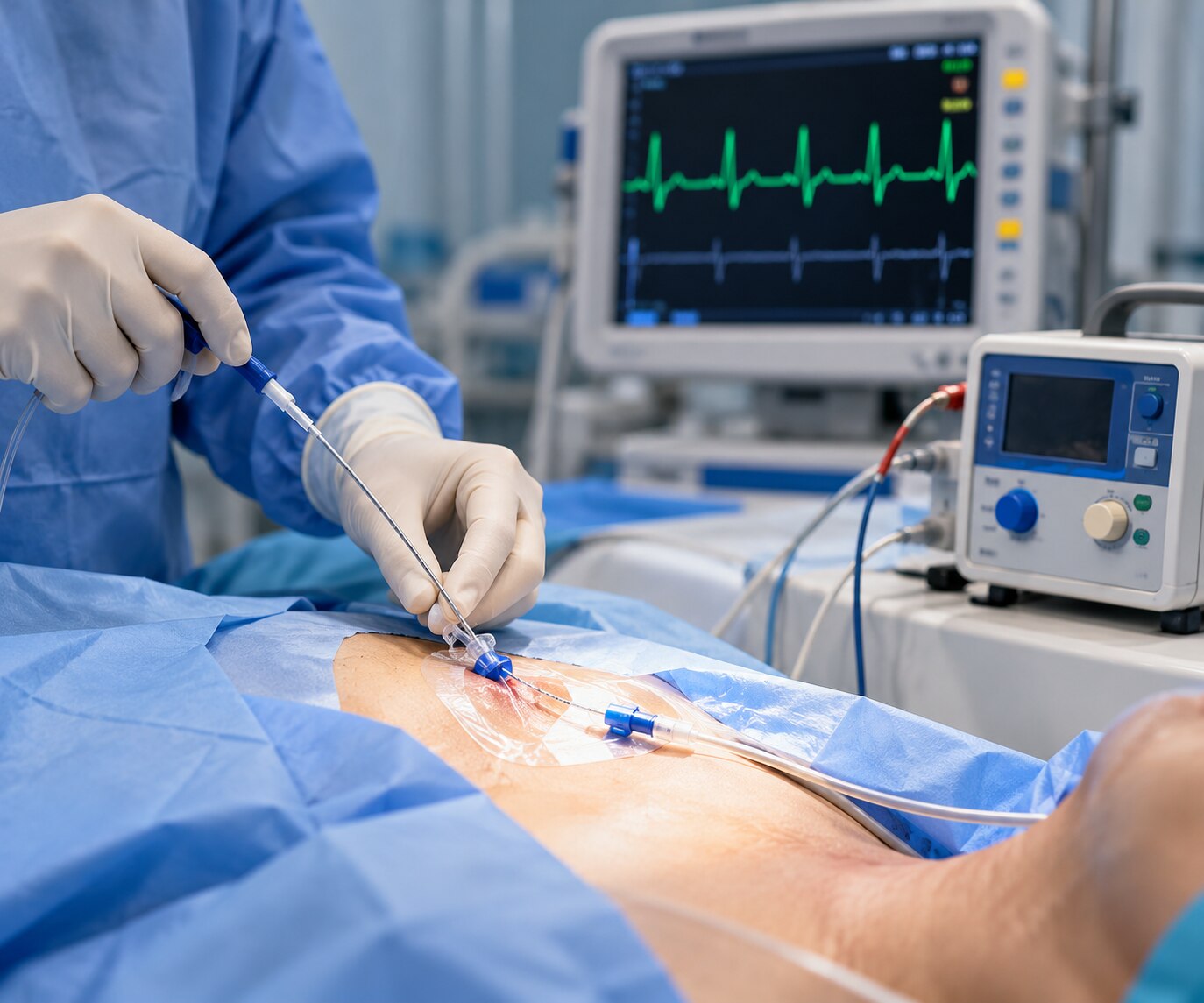
Chest pain, fainting, breathlessness, confusion, a returning slow pulse, or an alarm from the pacing monitor needs immediate attention, even when the generator is switched on. You will learn how to distinguish pacing failure from expected soreness, protect the wire and access site, and identify when the situation requires emergency transport or a monitored hospital team.
Key takeaways
- Report fainting, chest pain, severe breathlessness, or a slow pulse immediately.
- Treat loss of capture alarms or repeated shocks as urgent warning signs.
- Keep temporary pacing wires dry, secured, and free from pulling or twisting.
- Confirm monitoring, emergency support, and cardiology expertise before choosing care in Kalyan.
Which temporary pacemaker warning signs need immediate attention?
A temporary pacemaker can cause dangerous problems even while its external generator is switched on. Call the bedside nurse or treating team immediately if any of these temporary pacemaker warning signs appear; do not wait for a routine review.
- Chest pain, severe breathlessness, fainting, or loss of consciousness.
- New confusion, severe dizziness, extreme weakness, or a return of symptoms that had improved.
- Palpitations or a pulse that is very slow, very fast, or unexpectedly irregular.
| Warning sign | Action | Why it matters |
|---|---|---|
| Chest pain or severe breathlessness | Call the clinical team immediately; call emergency services if severe | Lead movement, a dangerous rhythm, lung injury, or heart complications need urgent assessment |
| Fainting, collapse, unresponsiveness, or new confusion | Call emergency services and do not leave the person alone | The heart may not be responding reliably to pacing, or blood pressure may be dangerously low |
| Palpitations, extreme weakness, or an abnormal pulse | Alert the nurse or treating team immediately | The rhythm may have changed or pacing may have failed |
| A normal pulse reading once | Continue monitoring and report symptoms | One normal reading does not prove reliable pacing between checks |
For collapse, unresponsiveness, or severe breathing difficulty, use emergency services rather than arranging transport or waiting for a clinic appointment. These symptoms can signal temporary pacemaker complications, and rapid assessment may include an ECG, blood-pressure checks, and imaging.
How can you recognise temporary pacing failure?
A pacing spike without a following QRS complex suggests failure to capture: the generator delivers a stimulus, but the heart does not depolarize. This can cause the heart rate to fall, blood pressure to drop, and faintness, confusion, breathlessness, or pulselessness to develop.
Ask the clinical team immediately about:
- A monitor alarm or a heart rate below the rate they set.
- Pacing spikes that are not followed by QRS complexes.
- Absent pacing spikes when pacing is expected.
- Return of dizziness, weakness, breathlessness, or other symptoms after initial improvement.
- A sudden change in the pacing pattern or a new slow rhythm.
- A possible lead displacement, especially after movement, because a moved lead can raise the capture threshold or stop capture.
Failure to sense is different. With undersensing, the generator misses the patient’s own heartbeat and may deliver pacing at the wrong time. With oversensing, it mistakes muscle activity, electrical interference, or another signal for a heartbeat and withholds needed pacing. Both are device-and-lead problems, not problems solved simply by increasing the rate.
For temporary pacemaker problems in Kalyan, ask whether the team has checked lead position, wire connections, sensing, capture threshold, battery power, programmed settings, the underlying rhythm, blood pressure, and symptoms. These temporary pacemaker complications require monitored troubleshooting; a single normal pulse reading does not prove reliable pacing.
Which access-site and heart complications are emergencies?
Mild soreness at the insertion site can follow a temporary wire. Expanding swelling, active bleeding, severe pain, or a new change in the site points to an emergency. These temporary pacemaker complications include hematoma, infection, venous injury or thrombosis, pneumothorax, arrhythmias, cardiac perforation, and pericardial tamponade.
| Finding | Less concerning | Emergency warning sign |
|---|---|---|
| Access site | Mild, stable soreness | Expanding swelling, persistent bleeding, severe pain, or a rapidly enlarging hematoma |
| Infection | Clean site without worsening discomfort | Spreading redness, warmth, swelling, increasing tenderness, fever, chills, or pus |
| Vein or chest | No new swelling or breathing problem | One-sided limb swelling, worsening breathlessness, or sudden chest pain after thoracic venous access |
| Heart rhythm or lead | Stable symptoms under monitoring | Palpitations, an unusually fast pulse, fainting, or a new irregular rhythm |
| Perforation or tamponade | No new chest symptoms | Sudden chest or shoulder pain, breathlessness, fainting, falling blood pressure, or rapid deterioration |
These temporary pacemaker warning signs require urgent assessment rather than a routine appointment. The treating team may need an ECG, chest imaging, echocardiography, blood-pressure support, or other emergency tests to check for pneumothorax, lead displacement, perforation, or tamponade. Call emergency services for collapse, loss of consciousness, severe breathing difficulty, or rapid deterioration.
Do not pull, adjust, handle, or re-dress the temporary wire, dressing, or external generator. Keep the system still and call the bedside nurse or treating team immediately unless they give different instructions.
How are temporary pacing wires used and protected?
Three temporary pacing methods differ in where the electrical stimulus is delivered and how the system is protected.
| Type | How it works | Practical limitation |
|---|---|---|
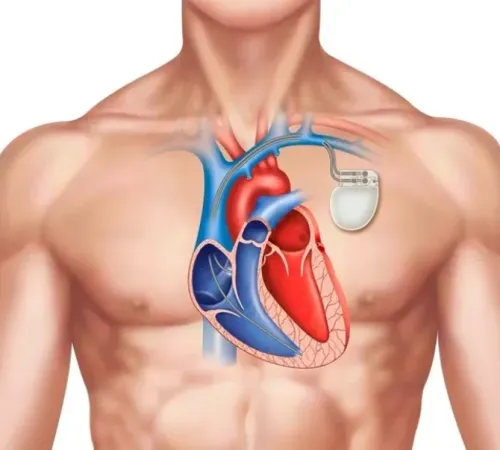
| Transvenous | A lead passes through a vein into the heart and connects to an external generator. | The vein entry and lead require careful movement restrictions. |
| Transcutaneous | Adhesive pads on the chest deliver impulses through the skin. | Strong, painful muscle contractions limit tolerance; it is usually a short-term emergency measure. |
| Epicardial | Wires placed on the heart surface during cardiac surgery connect to an external generator. | The surgical site and wires need protection until removal. |
A transvenous or epicardial system requires continuous ECG, blood-pressure, oxygen, and symptom monitoring. Clinicians also check lead position, connections, sensing, capture threshold, battery, and the underlying rhythm; one normal pulse reading does not prove reliable pacing. Internal temporary wires usually provide better tolerance than skin pacing, but they are not risk-free.
If you are concerned about temporary pacemaker problems in kalyan, protect the system by following these steps:
- Keep the generator and exposed lead secured; never pull, twist, adjust, or disconnect them.
- Follow movement limits based on the insertion route. Do not raise, stretch, or rotate the affected arm unless the treating team permits it.
- Keep the dressing and insertion site dry.
- Do not press, lie on, or place tight clothing over the access site.
- Report any accidental tug, loose connection, new pain, dizziness, breathlessness, palpitations, or returning weakness immediately.
What should you confirm before seeking temporary pacemaker care in Kalyan?
A temporary pacemaker doctor in Kalyan should be connected to a monitored hospital service, not only an ordinary ECG clinic. Before arranging non-emergency travel for temporary pacemaker problems in Kalyan, confirm that the team can provide:
- Cardiology or electrophysiology assessment for the rhythm problem and pacing need.
- Continuous ECG, oxygen, heart-rate, and blood-pressure monitoring.
- Immediate lead, connection, sensing, and capture troubleshooting.
- Echocardiography to assess heart function, lead position, fluid around the heart, or suspected complications.
- Blood-pressure support, including urgent treatment if circulation becomes unstable.
- Emergency escalation to a hospital team, intensive care, and procedures when required.
Muktai Heart Care Clinic - 08048034249 can be considered for cardiac assessment and guidance, but ask where monitored temporary pacing and emergency intervention would occur. Do not arrange routine travel if the patient has collapsed, is unresponsive, has severe breathing difficulty, or has unstable symptoms; call emergency services.
Before pacing is removed, clinicians review reversible causes such as medication effects, abnormal potassium or other electrolyte disturbance, reduced blood flow to the heart, infection, or a procedure-related problem. They then decide whether the rhythm has recovered enough to remove the system or whether longer-term pacing is needed.
Related service
Temporary Pacemaker A Temporary Pacemaker is a short-term cardiac device used to manage urgent or unstable heart rhythm problems, especially in patients with severe... View service → |
Frequently asked questions
Which temporary pacemaker warning signs need immediate attention?
Call the bedside nurse or treating team immediately for fainting, new confusion, chest pain, severe breathlessness, blue lips, a very slow pulse, palpitations, or an external generator alarm.
How can you recognise temporary pacing failure?
Warning signs include a pacing spike without a heartbeat, pauses, dizziness, fainting, recurrent slow heart rate, or an alarm indicating loss of capture, sensing, or battery power.
Which access-site and heart complications are emergencies?
Seek urgent help for uncontrolled bleeding, rapidly increasing swelling, severe pain, redness with fever, sudden breathlessness, sharp chest pain, or coughing blood.
How are temporary pacing wires used and protected?
Temporary wires connect the heart to an external generator and must remain secured, dry, untwisted, and free from traction. Do not adjust or disconnect them yourself.
What should you confirm before seeking temporary pacemaker care in Kalyan?
Confirm continuous rhythm monitoring, emergency resuscitation support, cardiology or electrophysiology coverage, trained nursing staff, and a clear plan for wire removal or permanent pacing.
Keywords