Calf pain, a cold or discoloured foot, numbness, or a wound that will not heal does not automatically mean you need an angiogram. You will learn which test usually comes first, when symptoms require emergency care, and what to verify before booking a facility in Kalyan.
Key takeaways
- Seek emergency care for a suddenly cold, pale, numb, weak, or severely painful leg.
- Ask whether ankle-brachial index or duplex Doppler should come before angiography.
- Verify kidney testing, contrast allergy protocols, catheter-lab capability, and written reports.
- Bring your medication list and ask when to stop blood thinners or diabetes medicines.
When leg symptoms justify a circulation assessment—and when to seek emergency care
Calf or thigh pain that reliably starts with walking and improves with rest supports a planned vascular assessment. So do foot pain at rest, cold feet, colour changes, numbness, weakness, reduced pulses, or a wound that does not heal.
These findings help answer where to book peripheral angiography for leg problems in Kalyan, but an angiogram is not a general-purpose test for every leg complaint.
Exertional pain can also come from spinal disease, arthritis, venous problems, or muscle disorders. A clinician should examine you and choose the test that fits the suspected cause.
Seek immediate emergency assessment instead of waiting for an outpatient booking if you have:
- Sudden severe leg pain
- A cold or pale foot
- New numbness or weakness
- Absent pulses
- Rest pain that is rapidly worsening
- A foot wound that is rapidly worsening, especially with diabetes or known vascular disease
| Pattern | What it may indicate | What to do |
|---|---|---|
| Walking-related pain relieved by rest | Possible intermittent claudication | Arrange a vascular assessment |
| Rest pain, coldness, colour change, reduced pulses, or non-healing wound | Reduced arterial blood flow | Arrange prompt clinical evaluation |
| Sudden severe pain with a cold, pale, numb, weak leg or absent pulses | Possible acute limb ischaemia | Go to emergency care immediately |
Which leg circulation test should come before peripheral angiography?
Start with history, a pulse examination, and an ankle–brachial index (ABI) or Doppler—not invasive catheter angiography. A leg circulation test in Kalyan often means an ABI, which compares systolic pressure at the ankle with pressure in the arm.
An ABI of 0.90 or lower supports peripheral artery disease; a result above 1.40 suggests stiff, poorly compressible arteries.
| Test | What it shows | Typical role |
|---|---|---|
| ABI | Ankle-to-arm pressure ratio | First-line screening |
| Arterial Doppler or duplex ultrasound | Flow speed and narrowing in leg arteries | Maps accessible vessels without arterial catheterisation |
| CT angiography | Detailed artery anatomy using X-rays and iodinated contrast | Planning when more anatomical detail is needed |
| MR angiography | Artery anatomy using magnetic imaging | Alternative mapping method when suitable |
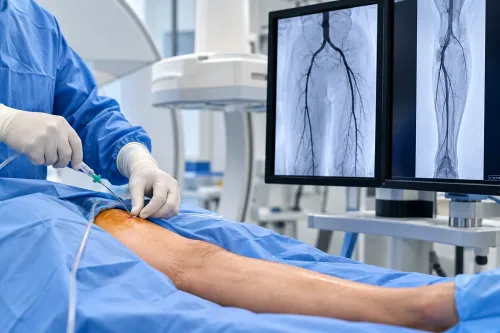
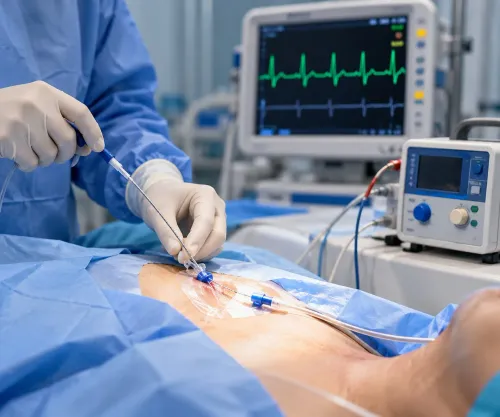
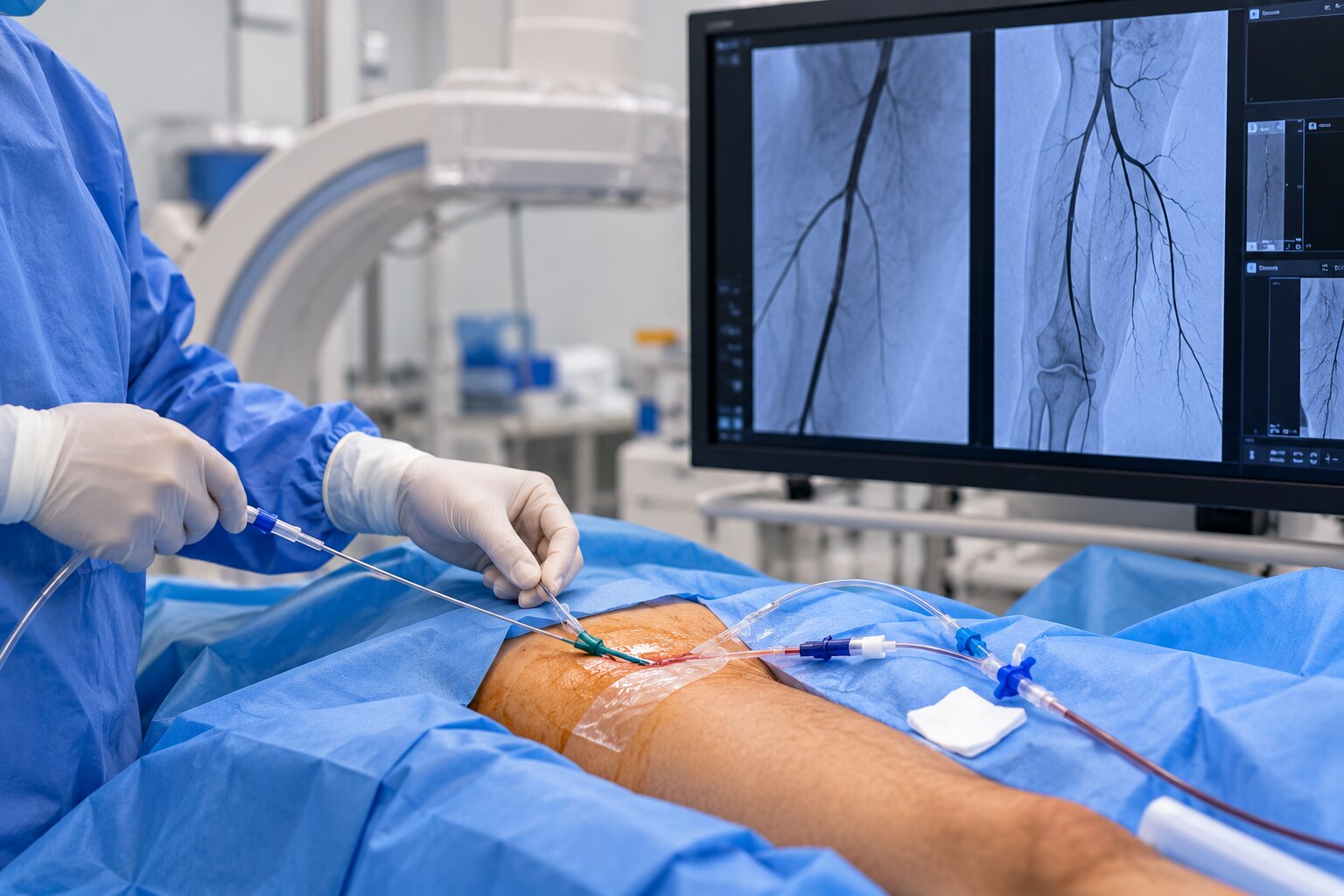
| Catheter angiography | X-ray images after a catheter enters an artery and contrast is injected | Revascularisation planning or treatment |
Exercise ABI, toe pressures, toe–brachial index, or pulse-volume recordings help when symptoms fit peripheral artery disease but resting ABI is normal, borderline, or falsely high. Diabetes and chronic kidney disease can calcify artery walls and distort cuff readings.
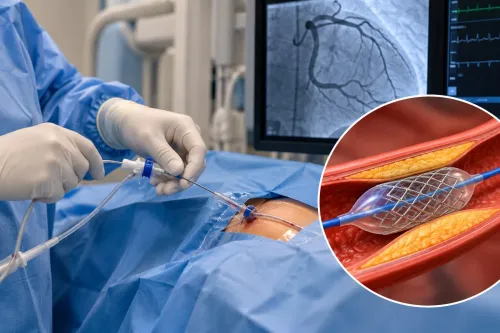
Before accepting an angiography appointment, define the peripheral artery test being offered. ABI and Doppler avoid arterial catheterisation and contrast exposure, so clinicians usually try them first. Catheter angiography is invasive and is often reserved for inadequate non-invasive imaging or possible balloon angioplasty, atherectomy, or stenting.
What to verify when choosing a peripheral angiography facility in Kalyan
For peripheral angiography booking in Kalyan, choose a hospital or vascular centre that explicitly performs lower-limb catheter angiography, not one that only advertises coronary angiography or general imaging.
| Facility type | What it means | When it applies |
|---|---|---|
| Standalone imaging centre | May offer Doppler, CT angiography, or MR angiography without arterial catheterisation | Use only if your clinician orders non-invasive imaging |
| Coronary-only centre | Performs heart-vessel angiography but may not assess or treat leg arteries | Do not assume it provides peripheral angiography |
| Hospital or vascular centre | Has catheter-based expertise, observation, and emergency support | Preferred for lower-limb catheter angiography |
When searching “peripheral angiography near me,” ask these questions before paying or fixing a date:
- Is there a catheterisation laboratory for lower-limb procedures?
- Which interventional cardiologist, interventional radiologist, or vascular specialist reviews my case?
- Does the laboratory use fluoroscopy with digital subtraction angiography?
- Is post-procedure observation available?
- Can the team perform balloon angioplasty, atherectomy, or stent placement if it finds a treatable blockage?
- Where does the procedure actually occur, and who manages access-site bleeding, contrast reactions, kidney injury, arterial injury, or embolisation?
If you contact Muktai Heart Care Clinic - 08048034249, verify these points directly rather than assuming that a listed peripheral service means onsite catheter angiography or treatment. Confirm the clinician, procedure location, equipment, observation plan, and complication support before booking.
Related service
Peripheral Angiography Peripheral Angiography is a diagnostic imaging procedure used to evaluate the blood vessels of the limbs and detect blockages or narrowing caused by... View service → |
How to make a peripheral angiography booking in Kalyan
For a peripheral angiography booking in Kalyan, use a direct call or message rather than asking for “a leg scan.”
1. “I need a vascular assessment for exertional calf pain, rest pain, a non-healing foot wound, a colour or temperature change, or an abnormal ABI.” State the exact symptom and which leg is affected.
2. “I can share my previous ABI, arterial Doppler, CT, or MR reports. I have [or do not have] diabetes, kidney disease, or a previous contrast reaction. I take aspirin, clopidogrel, warfarin, or a direct oral anticoagulant.” Name every medicine and dose if known.
3. “Do I need a referral? Does the clinician want an ABI or Doppler first? What is the appointment lead time? Which artery or body region will be assessed? Is this booking for imaging only, or could balloon angioplasty, atherectomy, or stent treatment happen during the same session?”
4. “Please confirm the facility’s full address, the actual procedure location, the clinician, arrival time, and procedure date in writing.” Check that the message names the same site where the procedure will occur.
These details help the centre decide whether catheter angiography is appropriate and what preparation is safe, including kidney-function review, contrast precautions, fasting, and medication instructions. Do not stop antiplatelet or anticoagulant medicines unless the treating clinician tells you to.
Preparation, medication questions, and risks to settle before the appointment
Before deciding where to book peripheral angiography for leg problems in Kalyan, confirm these details with the treating facility rather than guessing:
- Ask whether fasting is required, for how many hours, and whether water is allowed.
- Ask which medicines to take on the procedure day and what to do with diabetes tablets or insulin.
- Confirm whether recent creatinine, estimated glomerular filtration rate, or other kidney-function results are needed.
- Report any allergy or previous reaction to iodinated contrast, including rash, breathing difficulty, or low blood pressure.
- Tell the team whether pregnancy is possible.
Do not stop aspirin, clopidogrel, warfarin, or a direct oral anticoagulant without instructions from the prescribing clinician. The correct plan depends on bleeding risk, kidney function, and whether treatment is planned.
Catheter angiography can be imaging only or include treatment during the same admission.
| Option | What it means | What to confirm |
|---|---|---|
| Diagnostic angiography | Images the leg arteries | Consent, fasting, medicines, and observation |
| Angioplasty, atherectomy, or stenting | Treats a blockage during the procedure | Extra consent, medication planning, and recovery monitoring |
Risks include access-site bleeding or haematoma, arterial injury, contrast reaction, kidney injury, clot or embolisation, and rare limb-threatening complications. Ask about expected procedure duration, recovery time, observation, and the plan if treatment is recommended.
Frequently asked questions
When do leg symptoms justify a circulation assessment?
Book an assessment for walking-related calf or thigh pain relieved by rest, rest pain, cold feet, colour changes, numbness, weakness, reduced pulses, or a slow-healing wound. Seek emergency care for sudden severe pain, a cold or pale leg, new weakness, or sudden numbness.
Which leg circulation test should come before peripheral angiography?
A clinician may begin with an ankle-brachial index, toe-brachial index, or duplex Doppler ultrasound. These tests help determine whether catheter-based angiography is necessary and where narrowing may be located.
What should you verify when choosing a peripheral angiography facility in Kalyan?
Confirm that the facility performs lower-limb angiography, has a catheterisation laboratory, checks kidney function before contrast, handles contrast reactions, provides written images and reports, and explains follow-up care.
How do you make a peripheral angiography booking in Kalyan?
Ask for the earliest consultation, describe your symptoms and walking limit, share previous reports, and confirm whether a vascular consultation is required before scheduling the angiogram.
What preparation and medication questions should you settle before the appointment?
Ask about fasting, creatinine or eGFR testing, contrast allergy precautions, diabetes medicines, anticoagulants, antiplatelet drugs, transport home, and the risks of bleeding, kidney injury, infection, or artery damage.
Keywords