A general physician can identify a heart-rhythm concern and coordinate the first tests, but the decision to implant a pacemaker, ICD or CRT-D requires a more specific review. By the end, you will know which clinician should lead the decision, which records and questions to bring, when urgency changes the pathway, and how to assess the follow-up support behind an implant.
Key takeaways
- Start with a general physician for assessment, medication review and referral.
- Confirm the indication with a cardiologist experienced in cardiac electrophysiology.
- Bring ECGs, reports, medication lists and details of fainting or palpitations.
- Treat chest pain, severe breathlessness or collapse as urgent medical symptoms.
Who should lead the consultation before a device implant?
Begin with a general physician for an initial assessment, medication review and referral. A suspected pacemaker, ICD or CRT indication should then be confirmed by a cardiologist with cardiac-electrophysiology expertise, not treated as a routine purchase. This is the practical answer for a general consultation or specialist consultation before device implant in Kalyan.
| Clinician | Main contribution | Best reason to involve them |
|---|---|---|
| Electrophysiologist | Rhythm diagnosis, pacing, ICDs and lead strategy | Bradycardia, heart block, pauses, ventricular arrhythmia or an uncertain device indication |
| Interventional cardiologist | Coronary assessment, angiography and revascularization | Coronary disease may be causing reduced function or changing the device decision |
| Heart-failure specialist | Ejection fraction, symptoms, medical treatment and CRT assessment | Reduced heart function, persistent symptoms or possible resynchronization therapy |
A pre procedure heart consultation in Kalyan should compare medication, treatment of a reversible cause, ablation, revascularization, temporary pacing and permanent implantation. Ask, “Who will make the final device recommendation, and which specialist will provide long-term follow-up?”
Seek a second opinion for:
- An uncertain rhythm diagnosis or conflicting ECG, monitor or echocardiogram results
- An ICD proposed after the first low ejection-fraction measurement
- A CRT recommendation
- Major frailty, serious comorbidity or disagreement about benefits and risks
Choose the specialist whose expertise matches the reason for implantation. A temporary pacemaker may stabilise an unstable patient, but it does not prove that permanent implantation is needed after a reversible cause is treated.
What must be established before a pacemaker is recommended?
A slow pulse alone does not establish a permanent pacemaker indication. The clinician must identify the rhythm disorder and show that symptoms match bradycardia, pauses or heart block. A consultation before pacemaker implantation in Kalyan should include medication review, a 12-lead ECG and Holter or other ambulatory monitoring when episodes are intermittent.
| Situation | What it establishes | Usual implication |
|---|---|---|
| Isolated slow pulse | Low rate without symptom or conduction correlation | Investigate before recommending permanent pacing |
| Temporary pacing | Short-term stabilisation during selected unstable or reversible conditions | Treat the cause; temporary pacing does not prove permanent implantation is needed |
| Permanent pacing | A confirmed rhythm indication after reversible causes are addressed | Plan device type, leads and lifelong follow-up |
Ask these questions during a pre procedure heart consultation in Kalyan:
- What is the rhythm diagnosis, and what did the 12-lead ECG show?
- Did symptoms occur during bradycardia, pauses or heart block on the Holter or monitor?
- Could a medicine effect, electrolyte problem, thyroid disorder, infection or another treatable condition explain it?
- Which device and how many leads are recommended, where will each lead be placed, and why?
- What are the expected battery life, generator-replacement timing, procedural complications, wound-review date, device-interrogation schedule and long-term follow-up plan?
Request an echocardiogram with left-ventricular ejection fraction when reduced function or a high expected percentage of ventricular pacing could change the choice. Cardiac-resynchronization or physiologic pacing may suit that situation better than conventional right-ventricular pacing.
Which questions change an ICD or CRT-D decision?
The specialist must determine whether you need a pacemaker, ICD or CRT-D; an ICD is not simply a stronger pacemaker. Ask for the ejection fraction, how it was measured, the cause of reduced function, and the severity and duration of heart-failure symptoms.
If primary-prevention ICD criteria are being considered, ask whether guideline-directed medical treatment has continued long enough to reassess recovery.
| Option | Main benefit | Leads, programming and follow-up |
|---|---|---|
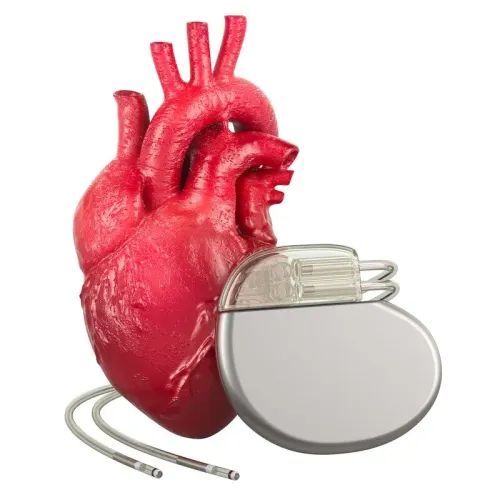
| Pacemaker | Treats slow rhythm or heart block | Paces; no shock function; interrogation and battery checks |
| ICD | Treats or prevents life-threatening ventricular arrhythmia | Detects and shocks; regular interrogation and shock review |
| CRT-D | Resynchronizes selected weak hearts and provides ICD protection | Usually three leads; programming, heart-failure review and shock follow-up |
Ask whether the purpose is primary prevention, before documented ventricular tachycardia, ventricular fibrillation or cardiac arrest, or secondary prevention, after one of those events. Also disclose unexplained fainting, sustained palpitations, family sudden-death history, inherited cardiomyopathy or channelopathy, ischemic heart disease and reversible triggers.
For CRT-D, ask what supports resynchronization: ventricular function, electrical conduction findings, symptoms and expected pacing benefit. Ask about inappropriate or painful shocks, emergency instructions, driving or occupational restrictions, and how therapies can later be adjusted or deactivated according to your goals.
A doctor visit before defibrillator procedure in Kalyan and a pre procedure heart consultation in Kalyan should end with the indication, alternatives, risks and follow-up plan clearly written.
What should you bring, and when does the pathway become urgent?
Bring your records to the consultation before pacemaker implantation in Kalyan, but do not delay emergency care while collecting them.
- 12-lead ECGs, Holter or event-monitor reports, and echocardiograms showing ejection fraction, chamber function and valve findings.
- Angiography reports, discharge summaries, prior procedure notes and existing device records.
- A complete medication list with doses, allergy history, and details of warfarin, a direct oral anticoagulant, aspirin or a P2Y12 antiplatelet drug.
- Recent kidney-function tests, including creatinine and estimated filtration, plus other available blood results.
An ECG identifies rhythm and conduction. Ambulatory monitoring connects intermittent symptoms with pauses or arrhythmias. Blood tests assess kidney function, electrolytes, blood count, glucose and reversible risks; chest imaging reviews lung or structural findings relevant to the procedure.
Report fever, a skin infection near the proposed pocket, recent bloodstream infection, diabetes, kidney disease or poor wound healing.
Do not stop warfarin, a direct oral anticoagulant, aspirin or a P2Y12 drug without the treating clinician’s plan. A doctor visit before defibrillator procedure in Kalyan must also address infection and bleeding risks.
Fainting, sustained palpitations, a very slow heart rate, chest pain, breathlessness at rest or recent cardiac arrest require urgent evaluation through emergency services or the clinician leading care in Kalyan or a nearby facility with urgent capability. Do not wait to assemble records or book a consultation.
How do you judge the implant centre and long-term consultation plan?
A centre is suitable only if it can provide care after implantation, not just perform the procedure. The choice between a general consultation or specialist consultation before device implant in Kalyan should confirm who will lead treatment, who performs the implant, and whether cardiac-electrophysiology support is available.
1. Ask where urgent device interrogation is available and how the centre handles lead dislodgement, pocket infection, bleeding, venous-access problems and ICD shocks. Confirm the wound-review date, in-person or remote interrogation schedule, battery-life monitoring, emergency contact process and generator-replacement plan.
2. Ask whether the exact generator and leads are MRI-conditional together. Record the permitted programming and scanner conditions, and keep the device identification card; every future imaging team needs it before an MRI.
3. Discuss expected benefit, complications, alternatives, frailty, other illnesses, expected survival and quality-of-life priorities. Ask what happens if medication, treatment of a reversible cause, ablation or revascularisation is preferable, and how device therapies could later be adjusted or deactivated.
A pre procedure heart consultation in Kalyan can add value by checking the indication, investigations, medication risks and referral or follow-up arrangements before you commit.
Muktai Heart Care Clinic - 08048034249 can be useful for that structured review, but the deciding question is whether the implant centre offers the specialist expertise and continuing device care your case needs. Leave with a written diagnosis, device rationale, test results, medication instructions and follow-up plan—not only a procedure date.
Related service
Cardiac Consultation Cardiac Consultation is a comprehensive evaluation of a patient’s heart health to diagnose, prevent, and manage cardiovascular diseases. Dr. View service → |
Frequently asked questions
Who should lead the consultation before a device implant?
Begin with a general physician for an initial assessment and medication review. A cardiologist with cardiac-electrophysiology expertise should confirm the indication for a pacemaker, ICD or CRT-D.
What must be established before a pacemaker is recommended?
The consultation should establish the rhythm problem, symptoms, ECG findings, reversible causes, medication effects and whether monitoring or other treatments are needed before implantation.
Which questions change an ICD or CRT-D decision?
Ask about the cause and severity of heart failure, ejection fraction, ventricular arrhythmias, prior cardiac arrest, QRS duration, expected benefit, competing illnesses and long-term follow-up.
What should you bring to a pre-procedure heart consultation?
Bring ECGs, echocardiogram and other test reports, discharge summaries, a complete medication list, allergy details and a timeline of fainting, palpitations or breathlessness.
When does the pathway become urgent?
Seek urgent medical care for collapse, chest pain, severe breathlessness, sustained palpitations, new confusion or symptoms suggesting a dangerous rhythm.
Keywords